
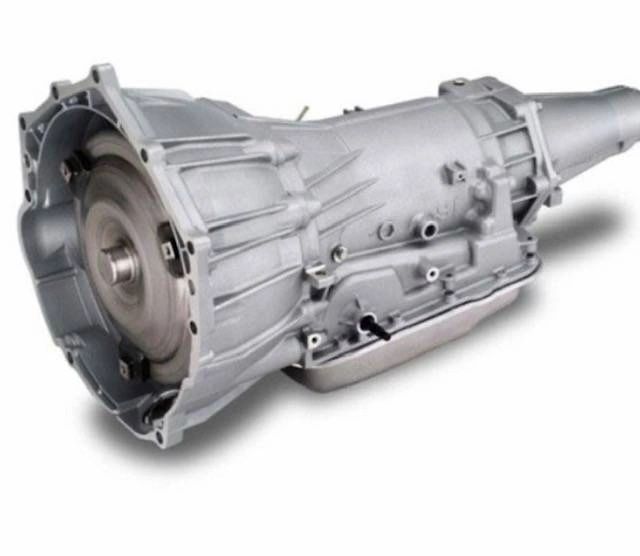
A Brief History Of The 4L60
The history of the 4L60 transmission is closely tied to GM’s Turbo-Hydramatic family of automatic transmissions.
Here is a brief overview from the rebuilders at Sun West Transmissions — and if yours needs work, see our 4L60E rebuild prices.
From Turbo-Hydramatic To 4L60E
Early Development
The 4L60 is part of GM’s Turbo-Hydramatic series of transmissions, which dates back to the early 1960s. The THM350, a three-speed automatic used in many GM vehicles, was introduced in 1969.
Evolution To The 4L60
In the 1980s GM developed the 700R4, an improvement over the THM350 that added an overdrive gear for better fuel economy at highway speeds. In the early 1990s GM further refined the 700R4, resulting in the 4L60.
4L60 Features
The 4L60 was similar to the 700R4 but added several improvements, including a stronger input shaft, an improved valve body design and updated electronics. The “4” refers to the number of forward gears, the “L” stands for longitudinal (rear-wheel drive), and “60” is a rough indication of its torque capacity.
The 4L60E
In 1993 GM introduced the 4L60E, an electronically controlled version of the 4L60. The “E” stands for electronic, and it brought better shift quality and reliability. The 4L60E became the standard automatic in many GM vehicles throughout the 1990s and early 2000s.
Later Developments
In the mid-2000s GM introduced the 4L65E, an upgraded version of the 4L60E with higher torque capacity. GM continued to produce the 4L60E and its variants until the mid-2010s, when it was phased out in favor of more modern transmissions.
Throughout its history the 4L60 and its variants have been praised for their durability, smooth shifting and wide compatibility with GM vehicles.